Category: Career & Skills Development

Career & Skills Development

  • How Online Learning Can Help You Discover Your Career Early

    How Online Learning Can Help You Discover Your Career Early

    How Online Learning Can Help You Discover Your Career Early

    If you ask a teenager what they want to be in future, many will say:

    “I don’t know yet.”

    And that is okay. Choosing a career can feel scary. The world has thousands of jobs, and new ones appear every year. How is anyone supposed to know what fits them best?

    But here is the good news: online learning makes this easier than ever before. It turns the confusing question

    “What should I become?”

    into an exciting journey of discovery.

    Let us explore how online learning can help young people find their passion early, confidently, safely, and in a fun, simple way.

    You can explore many careers without pressure

    Before online learning, discovering careers was hard. You needed books, career counsellors, special classes, or someone who already knew the field.

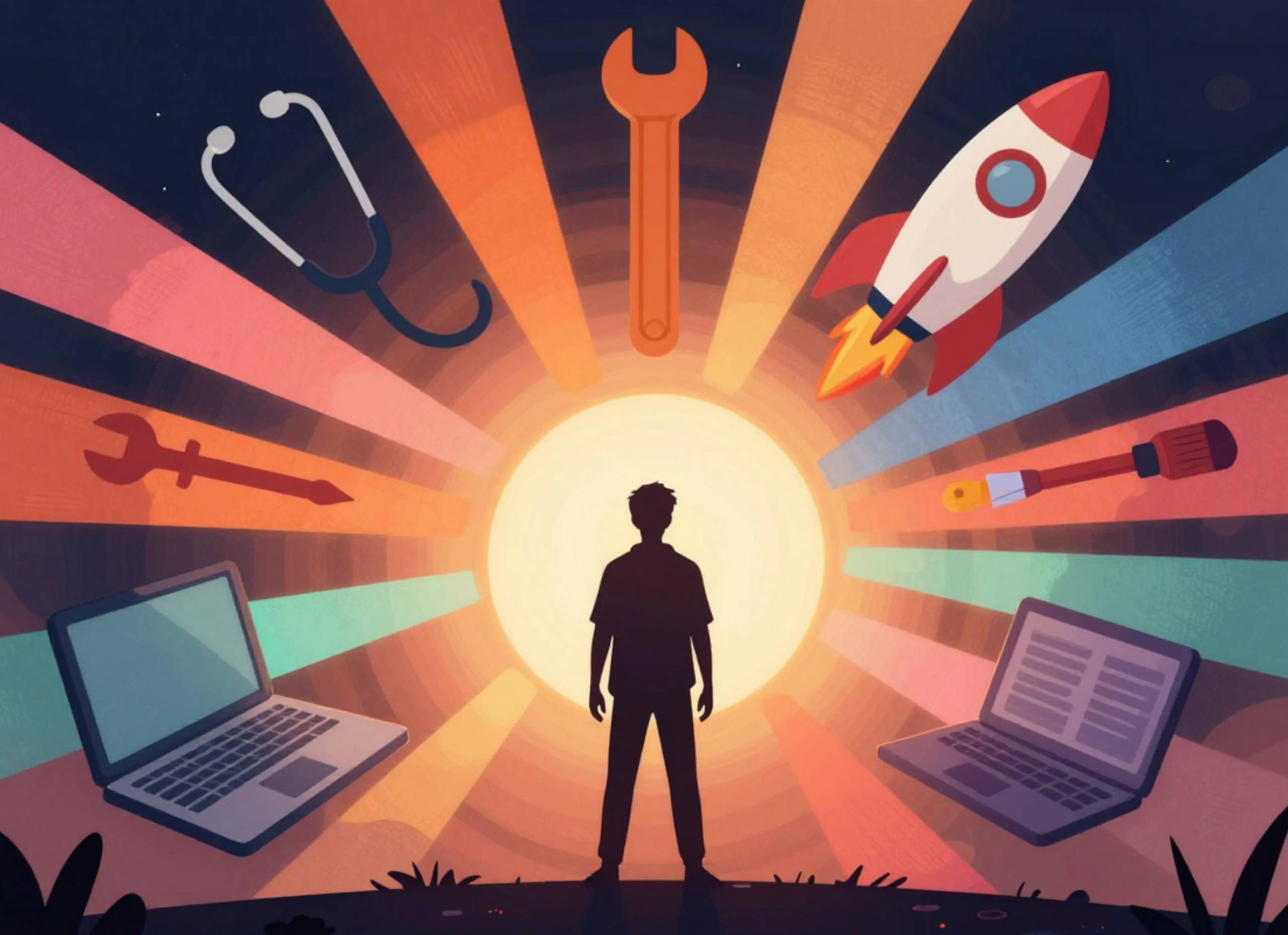
    Now? A child anywhere in the world can explore: medicine, engineering, farming, coding, acting, business, fashion, aviation, robotics, art, photography, architecture, teaching, …and so much more, right from their phone or tablet. With online learning, exploring careers is like trying on clothes – you can “test” many until one fits perfectly.

    Online courses help individuals to discover what they enjoy (and what they don’t!)

    Sometimes young people think they want a certain career… until they try it. Someone might say:

    “I want to be a doctor!”

    Then they try a biology course and realize they hate blood. Another might say:

    “I don’t like math.”

    Then they try a coding game and discover they are actually brilliant at it.

    Online learning lets users try new things, fail safely, switch quickly, follow curiosity and learn without embarrassment. That freedom helps them discover who they really are.

    Individuals gain skills that point them in the right direction

    Every online lesson builds real skills. For example:

    A child who enjoys editing videos may be creative or detail-oriented.

    A teen who loves solving math puzzles may be great in engineering.

    Someone who enjoys storytelling might thrive in media, writing, or teaching.

    A student who loves online science experiments could excel in STEM careers.

    These skills are clues, and together, they form a map that points toward the right future.

    Online learning builds confidence — a key part of career discovery

    Career choice is not only about talent. It is also about confidence. Online learning helps students grow their courage by letting them:

    Learn at their own pace

    Ask questions without fear

    Retry lessons until they understand

    Celebrate small wins

    See their progress clearly

    A confident child dares to dream. A confident teen dares to choose.

    Access to global inspiration

    In the digital world, role models are everywhere – and one inspiring video can spark a lifetime purpose. Online learning gives young people access to:

    Mentors

    Experts

    Teen innovators

    Young entrepreneurs

    Inspirational stories

    Real talks about real careers.

    Seeing someone your age build an app or start a business can completely change how you see your own abilities.

    Online learning helps you see the future of work clearly

    Many future jobs don’t even exist yet. But online learning is up-to-date. It teaches skills like: AI, coding, robotics, digital design, data skills, online business, content creation, problem-solving, and innovation among others. These skills power the careers of tomorrow, and young people who begin learning them early gain a major advantage

    It levels the playing field for every child

    This might be the most beautiful part. Online learning gives equal opportunity to:

    Kids in cities

    Kids in villages

    Kids in private schools

    Kids in public schools

    Kids with different abilities

    Kids from marginalized backgrounds.

    With a phone, tablet, or shared computer, any child can discover their future without waiting for someone else to tell them who to be.

    Reflection

    Choosing a career shouldn’t feel scary. It should feel exciting. Online learning makes that excitement possible. It opens doors, lights paths, reveals strengths, and helps young people find what truly makes them come alive.

    So, whether you are a parent with a curious child, a teen unsure about the future, a teacher guiding learners, or a young person exploring your purpose, remember this: The earlier you explore, the clearer your future becomes.

    Online learning teaches possibilities. And somewhere online, your future career is waiting for you to click “Start Lesson.”
  • How to Become a Smart Digital Learner in the Modern World

    How to Become a Smart Digital Learner in the Modern World

    How to Become a Smart Digital Learner in the Modern World

    The world today is digital. From homework and online classes to games and social media, screens are everywhere. But just because kids spend a lot of time online doesn’t mean they are learning effectively.

    Being a smart digital learner is about learning smarter, faster, and safer. And the good news? Anyone can become one, with the right habits and mindset.

    Here is how.

    Set up your learning space

    Your environment matters. Even online, a proper study spot helps your brain focus.

    Find a quiet, comfortable space

    Keep your desk organized

    Make sure there is good lighting

    Keep your phone silent (unless you need it for studying).

    A small, neat space can make a huge difference and how much you absorb.

    Make a daily learning routine

    Smart learners don’t leave learning to chance, they schedule it.

    Set regular class and homework times

    Take short breaks to refresh your mind

    Mix learning and play to avoid burnout.

    Routines train your brain to focus when it is time to learn and relax when it is time to rest.

    Stay curious, ask questions

    Smart digital learners are not satisfied with just watching videos or reading slides. They ask questions like:

    “Why does this happen?”

    “How does this work?”

    “What are its effects?”

    Curiosity turns passive learning into active learning and makes lessons stick longer.

    Take smart notes

    Even online, writing your own notes helps you remember more.

    Use bullet points

    Summarize ideas in your own words

    Highlight key terms

    Draw diagrams if it helps.

    Notes are your personal guide to understanding.

    Manage your screen time wisely

    Not all screen time is learning. Smart digital learners balance focus and fun.

    Use apps and websites for lessons first

    Take regular breaks (try the Pomodoro Technique: 25 minutes of focus, 5 minutes of rest)

    Avoid distractions like social media or games while studying.

    Balance keeps your mind fresh and ready to absorb knowledge.

    Be safe and responsible online

    Digital learning comes with responsibilities:

    Protect personal information

    Use strong passwords

    Avoid clicking suspicious links

    Treat others with respect online.

    Smart learners know that being safe is part of being effective.

    Learn how to learn online

    Digital learning is different from classroom learning. Smart learners:

    Explore lessons at their own pace

    Research and re-watch tricky topics

    Take quizzes to check understanding

    Use videos, games, and interactive tools to reinforce learning.

    This flexibility makes online learning powerful, but only if you use it wisely.

    Collaborate and share knowledge

    Even online, learning is not a solo journey:

    Join study groups

    Discuss lessons with classmates

    Teach friends what you have learned.

    Sharing knowledge strengthens understanding and builds confidence.

    Celebrate your progress

    Smart learners notice growth. Small wins count incuding:

    Completing a lesson

    Passing a quiz

    Mastering a new skill.

    Celebrating achievements keeps motivation high and makes learning fun.

    Stay curious about the world

    The ultimate mark of a smart digital learner is curiosity beyond schoolwork:

    Explore topics you love

    Follow online tutorials

    Try new hobbies and challenges

    Ask questions about the world.

    Curiosity turns learning from a task into a lifelong adventure.

    Reflection

    Being a smart digital learner means using technology wisely, staying curious, managing time and focus, and protecting yourself online. It is about how you use that time to grow, explore, and prepare for the future.

    The modern world rewards those who can learn online, adapt quickly, and discover solutions on their own.

    Start today, and you will be ready for tomorrow, no matter what it brings.

  • The Digital Skills Every Teen Must Have Before Age 18

    The Digital Skills Every Teen Must Have Before Age 18

    The Digital Skills Every Teen Must Have Before Age 18

    The world our teenagers are growing up in is not the same world their parents knew. Today, almost everything – schoolwork, communication, careers, business, money, and even hobbies -happens through technology.

    And while teens may know how to swipe, scroll, and snap better than most adults, being good with a phone is not the same as being digitally skilled.

    Digital skills are now as important as reading, writing, and math. They shape opportunities. They open doors. They prepare young people for a world that is changing faster than ever.

    So, what digital skills MUST every teen have before turning 18?

    Smart online research

    Teens must know how to:

    Search properly

    Compare information

    Spot fake news

    Check credible sources.

    Internet is full of information, but not all of it is true. A teen who knows how to find the right information can solve problems faster, learn anything, and make better decisions.

    Basic computer skills

    This includes:

    Typing

    Using Word, Slides, and Spreadsheets

    File management

    Email etiquette.

    These skills are needed in school, college, work, business, everywhere. A teen who cannot use basic digital tools will struggle in today’s world.

    Communication in the digital world

    Teens must know how to communicate responsibly online:

    Writing clear messages

    Understanding tone

    Respecting others

    Avoiding harmful posts

    Staying safe from strangers.

    The internet remembers everything. Learning to communicate wisely is learning to protect your future.

    Cyber safety & digital responsibility

    Teens face real online dangers like:

    Scams

    Hacking

    Cyberbullying

    Fake accounts

    Misleading content.

    Teens should know how to create strong passwords, protect personal information, and report harmful behavior. Staying safe online is an essential life skill.

    Online learning skills

    Teens must know how to:

    Use learning platforms

    Manage online assignments

    Take digital quizzes

    Attend virtual classes

    Learn independently.

    Whether in school, college, or work, digital learning is here to stay. A teen who knows how to learn online can learn anything.

    Creativity & digital content creation

    This includes:

    Making presentations

    Editing photos or videos

    Simple design

    Blogging or writing

    Coding basics

    Creating digital portfolios.

    These skills help teens express themselves, build confidence, and even create opportunities like scholarships, jobs, or freelance income. Digital creativity is for every child who wants to stand out.

    Financial digital skills

    By age 18, teens should know:

    How digital payments work

    How to avoid online money scams

    How to track spending

    Basics of online banking (with guidance!)

    The world uses digital money. Teens must learn to use it wisely, safely, and with responsibility.

    Problem-solving with technology

    Teens should know how to use digital tools to:

    Solve school problems

    Explore career interests

    Fix simple tech issues

    Boost productivity.

    The ability to solve problems using technology makes a teen resourceful, confident, and ready for the real world.

    Collaboration & teamwork online

    Many school projects, workplaces, and global programs now happen online. Teamwork is no longer only face-to-face, it is across screens, countries, and time zones. Teens must know how to:

    Work in shared documents

    Communicate respectfully

    Manage group tasks

    Meet deadlines.

    Reflection

    Digital skills are essential tools that shape who teens can become and what opportunities they will have. A teen who learns these skills early walks into adulthood with confidence. A teen who lacks them walks into a world they are not prepared for.

    Let us give our teens the skills they need – not for tomorrow, but for today, because the future is already here, and every young person deserves the chance to be ready for it.

  • Why Digital Education Is the Key to Future Jobs Nobody Has Named Yet

    Why Digital Education Is the Key to Future Jobs Nobody Has Named Yet

    Why Digital Education Is the Key to Future Jobs Nobody Has Named Yet

    Imagine a world where the jobs your children will do don’t even exist yet. Sounds incredible, right? But it is not. The world is changing faster than ever, and technology is opening doors to opportunities that did not exist yesterday, and may not even have names today.

    This is why digital education matters so much. It gives young people the skills, confidence, and curiosity they need to thrive in a future filled with new careers, exciting ideas, and possibilities we cannot even imagine yet.

    The Future Is Full of New Jobs

    Think about how fast technology has created new careers in the past decade: app developers, social media managers, drone operators, AI specialists, and many more. Ten years ago, these roles did not exist. Ten years from now, there will be jobs that sound completely unfamiliar today.

    Digital education equips children with skills that adapt, like; problem-solving, critical thinking, creativity, collaboration in digital spaces, and learning how to learn. These skills are not tied to a single job. They prepare children for any future career, known or unknown.

    Digital Education Builds Skills for A Connected World

    In the past, where you could work was largely limited by geographic boundaries – cities, regions, or even countries. Today, technology breaks those boundaries, connecting people and opportunities across the globe. Learning digitally means children can:

    Collaborate with peers across continents

    Access information instantly

    Solve real-world problems using technology

    Explore and experiment without limits.

    A global perspective, combined with strong digital skills, is essential for succeeding in the jobs of tomorrow and navigating the future with confidence.

    Why it matters for every child

    Digital education helps learners to:

    Adapt to change quickly.

    Think creatively and independently.

    Take control of their learning.

    Build confidence in a fast-moving world.

    A child with strong digital skills can thrive no matter what new career appears on the horizon.

    Parents and teachers play a key role

    Support from adults like teachers and parents makes all the difference. They can help by:

    Encouraging curiosity and exploration online.

    Providing safe and reliable digital infrastructure.

    Guiding children to use technology responsibly.

    Supporting emotional and social development alongside digital learning.

    5. The opportunity is now

    The future belongs to those who can adapt, learn, and imagine. When children learn digitally with proper guidance, they not only build essential life skills but also gain the confidence and adaptability needed to succeed in a world we cannot fully predict. A world that is full of unknown opportunities and challenges. The jobs of tomorrow will belong to those who learned to dream, explore, and create today.

    Reflection

    Digital literacy is the bridge between today’s classrooms and tomorrow’s innovative careers. Let us give every child the opportunity to thrive in a future full of possibilities, including new jobs and careers that are yet to be discovered and named.

  • Why Digital Literacy Is Essential for Kids in the 21st Century

    Why Digital Literacy Is Essential for Kids in the 21st Century

    If we look at how much of our lives now depend on digital devices -smartphones, computers, and the internet, it is clear that knowing how to read and write is no longer enough. Kids today need to be digitally literate to navigate the fast-paced, technology-driven world they that they are growing up in. But what does digital literacy really mean, and why should parents, teachers, and kids themselves care?

    Let us dive in and explore why digital literacy is a vital skill in the modern era:

    What Is Digital Literacy?

    Digital literacy is about having the skills to navigate digital spaces safely, critically, and effectively. This includes:

    Understanding how to use digital tools like apps, websites, and online platforms.

    Knowing how to find, evaluate, and use information online in a responsible way.

    Being aware of online safety, knowing how to protect personal information and avoid online dangers.

    Creating content such as videos, blogs, and social media posts.

    Collaborating and communicating online, whether it is through emails, messaging, or video calls.

    Digital literacy is a skill that needs to be learned and practiced.

    Why Is Digital Literacy So Important?

    In this digital age, everything is connected. From online schoolwork to socializing with friends, and even applying for jobs, digital skills are involved in almost every aspect of life.

    Here are several reasons why digital literacy is an essential skill:

    Everything is online

    From school lessons to homework, online learning has become a huge part of education today. If a child is not digitally literate, they may struggle to access or understand their learning materials. Knowing how to search for information, use educational apps, and even create digital presentations is just as important as reading a textbook or writing an essay.

    It is crucial for future jobs

    More and more careers are shifting to the digital world. Whether it is coding, digital marketing, design, or even virtual health care, almost every job requires some level of digital literacy. Without these skills, kids may find it harder to succeed in the workforce when they grow up.

    It empowers kids to be creators

    Digital tools allow kids to not just consume content, but create their own. They can make videos, start a blog, design digital art, or even create games. Digital literacy helps kids unlock their creativity, express themselves, and showcase their talents in exciting new ways. This builds confidence and gives them a sense of ownership over their work.

    Digital literacy builds critical thinking

    Being digitally literate is also about thinking critically. Kids need to learn how to evaluate online information, spot fake news, and make responsible decisions in digital spaces. In today’s world, critical thinking is key to making smart choices online and avoiding online scams, cyberbullying, or misinformation.

    How Can Parents and Teachers Help?

    Now that we understand why digital literacy is so important, how can parents, teachers, and other adults help kids build these skills?

    Introduce digital tools early

    Start by introducing children to digital tools that are age-appropriate. Apps, websites, and educational games can teach them about technology while helping them build essential skills. Make sure these tools are fun and interactive to keep them engaged.

    Set guidelines for safe internet use

    Teach your kids about online safety. Explain why they should protect personal information and what kinds of websites and apps are safe to use. It is also important to set boundaries – limiting screen time and encouraging healthy online habits.

    Encourage problem-solving with technology

    Encourage your child to use technology to solve problems. Whether it is finding information online, creating a presentation, or collaborating on a group project, let them experiment and explore. This helps build their confidence and independence when using digital tools.

    Discuss digital responsibility

    Talk about the importance of being respectful and kind online. Teach your kids how to communicate effectively and respectfully in digital spaces, whether through email, social media, or video chats. Show them how to engage in positive online behaviors and handle conflicts with maturity.

    Digital Literacy: A Key to The Future

    As we move further into the digital age, the ability to read, write, and think critically online will be crucial for kids’ success, both in school and in life. Just like traditional literacy helped us communicate and navigate the world in the past, digital literacy will be the skill that sets kids up for success in the future.

    We are not just preparing kids for schoolwork. We are preparing them for the world, where digital literacy is the foundation for creativity, problem-solving, communication, and future career success.

    Let us equip our kids with essential digital skills, giving them a head start to thrive in the digital world.

  • Why Digital Literacy Is the New “Reading and Writing” for Kids

    Why Digital Literacy Is the New “Reading and Writing” for Kids

    If you ask any parent what skills their child must have, they will probably say:

    “Reading and writing.”

    And they are right. But today, something important has joined that list, something every child needs, no matter where they live, how old they are, or what school they attend. That skill is digital literacy.

    Digital literacy is the new reading and writing. Not because the old skills are less important, but because the world has changed, and our children must change with it.

    So… what exactly is digital literacy? The answer is simple. Digital literacy is knowing how to use technology safely, wisely, and confidently. It includes things like:

    How to find information online

    How to tell if something is true or fake

    How to use learning apps and platforms

    How to type, search, and create

    How to stay safe from dangers online

    How to solve problems using digital tools.

    In the same way children learn to read books, they must also learn to read the digital world.

    Why Is Digital Literacy the New “Reading and Writing”?

    Because the world has moved online: Schoolwork, jobs, communication, shopping, banking, health, transport, everything now uses technology. A child who cannot use digital tools is like a child who cannot read signs in a busy city. They get lost easily.

    Because future jobs will demand it: By the time today’s kids are adults, most jobs will require digital skills, whether they become doctors, drivers, teachers, artists, farmers, or business owners. The child who learns these skills early will always be one step ahead.

    Because learning is now digital: Children now watch science experiments online, practice math on apps, read e-books, or learn languages from their phones. Digital literacy helps them learn faster and smarter.

    Because the online world needs safe, smart users: Kids face online risks like cyberbullying, fake news, scams, and harmful content. Digital literacy teaches children how to protect themselves and make good decisions.

    Because it gives every child equal opportunity: A child in a remote village with digital skills can compete with a child in a big city. They can learn the same lessons, access the same knowledge, and dream the same dreams.

    This is the power of digital literacy – it levels the playing field.

    How Parents Can Help Their Children Become Digitally Literate

    You don’t need to be a tech expert. Here are simple things any parent can do:

    Learn together: Ask your child to show you what they are learning online. Let them teach you. You will be amazed at how confident it makes them feel.

    Choose safe, trusted learning platforms: Pick tools and apps that build skills and support schoolwork.

    Talk about online safety openly: Teach them:

    Never talk to strangers online

    Never share personal information

    Always ask for help when unsure.

    Encourage creativity: Ask them to type stories, make digital drawings, create presentations, or research interesting topics.

    Set simple rules: Not strict punishment – just healthy boundaries. For example: learning time first, then fun time.

    What Teachers and Schools Can Do

    Teachers play a huge role. They can:

    Use blended learning (traditional + digital)

    Teach students how to research correctly

    Encourage problem solving with digital tools

    Show students how to think critically

    Guide them on what is safe and unsafe online.

    Schools that embrace digital literacy prepare children not just for exams, but for life in the 21st Century.

    How Digital Literacy Helps Kids in Real Life

    Digital literacy builds confidence, independence, and a sense of possibility. A digitally literate child can:

    Study smarter with online tools

    Create instead of just consume

    Access global knowledge instantly

    Learn at their own pace

    Discover talents early

    Stay safe online

    Prepare for future careers.

    Reflection

    Reading and writing opened the door to the world. Digital literacy opens the door to the future. Every child who learns how to use technology wisely is better prepared to learn, create, explore, and succeed in a world that won’t slow down for anyone. So the real question is no longer:

    “Should kids learn digital skills?”

    The real question is:

    “How soon can we help them start?”

    The earlier we build digital literacy, the brighter the world becomes for every child, everywhere.